

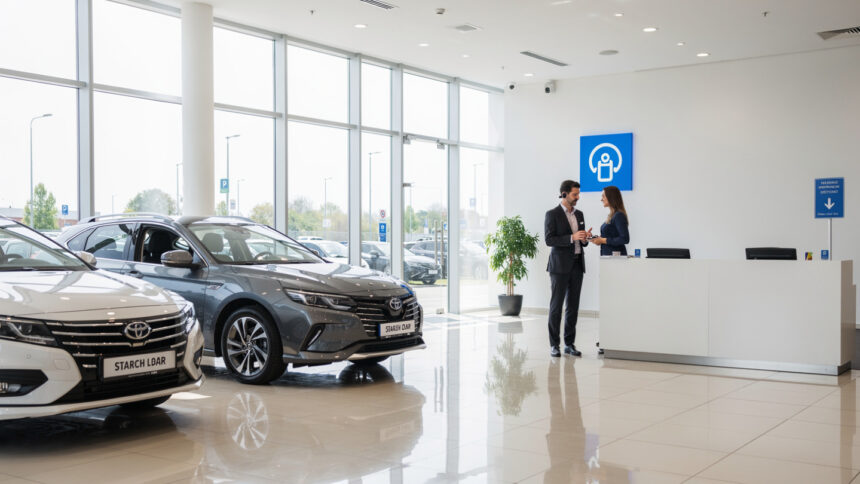
A car dealership with hearing loop offers a far better, more inclusive experience for customers who use hearing aids or cochlear implants. By transmitting clear sound directly to compatible devices, it removes much of the background noise that usually makes showrooms challenging to navigate.
What Is a Car Dealership with Hearing Loop?
A car dealership with hearing loop is a showroom or service center fitted with an assistive listening system based on induction loop technology. The system sends audio from staff microphones or desk units directly into a user’s hearing device, instead of relying only on ambient speakers.
The hearing loop consists of a cable installed around a defined area, a loop amplifier, and one or more microphones at sales desks, reception, or meeting spaces. When a customer switches their hearing aid to the telecoil (T) setting, they receive a cleaner sound signal with reduced distortion.
How Hearing Loop Technology Works in Showrooms
In a car dealership with hearing loop, the microphone picks up the staff member’s voice and sends it to the loop amplifier. The amplifier creates a magnetic field within the looped area, which is picked up by the telecoil inside the hearing aid or cochlear implant.
This means the customer hears the salesperson or adviser at a comfortable volume, even in busy showrooms with hard surfaces, background music, and other conversations. The result is clearer speech understanding during test-drive briefings, finance discussions, and after‑sales appointments.
Why Car Dealership with Hearing Loop Matters for Customers
Visiting a car dealership with hearing loop can transform the buying journey for people with hearing loss. They can follow conversations more easily, ask detailed questions, and feel confident they are getting the full information on safety features, pricing, and warranty.
It also reduces the stress and fatigue that often comes with trying to lip‑read or struggle through noisy environments. For many customers, this accessibility feature is the difference between avoiding showrooms entirely and actively engaging with the purchase process.
Accessibility Benefits of Car Dealership with Hearing Loop
A car dealership with hearing loop supports equal access to information for a large group of potential buyers. Millions of adults live with some degree of hearing loss, and many rely on telecoil‑enabled hearing aids to participate fully in conversations.
By offering a clear audio channel, the dealership shows that it respects the time, needs, and independence of these customers. It also helps family members who might attend the visit together, so everyone can participate in decisions about models, trim levels, and finance plans.
Business Advantages for a Car Dealership with Hearing Loop
From the business side, a car dealership with hearing loop sends a strong message about inclusion and customer care. This can lead to positive word‑of‑mouth in local communities, disability forums, and social media groups where accessibility is a key topic.
Better communication also means fewer misunderstandings about prices, options, and service packages, which can reduce disputes and improve satisfaction. Over time, this can translate into improved loyalty, repeat purchases, and stronger relationships with motoring schemes or mobility programs.
Where You Might Find a Car Dealership with Hearing Loop
In many regions, dealerships that join national motoring or mobility programs are encouraged to install hearing loop systems. These organizations often list accessible features such as ramps, adapted vehicles, and assistive listening on their dealer profiles.
Larger brand dealers and groups are increasingly fitting loops at reception desks, sales counters, and handover bays. Some also add portable loop units for use in private offices where finance or contract details are discussed in depth.
How a Car Dealership with Hearing Loop Improves the Buying Journey
From the first greeting at reception, a car dealership with hearing loop allows customers to understand staff without constantly asking for repetitions. This sets a relaxed tone and makes it easier to build rapport before exploring vehicle options.
During the test‑drive briefing or safety explanation, the loop supports clear communication about controls, driver‑assist technologies, and special adaptations. When it is time to sign paperwork, the same system ensures the financial terms are explained accurately and respectfully.
Features to Look For in a Car Dealership with Hearing Loop
When you visit or phone ahead, you can ask whether the showroom is a car dealership with hearing loop facilities at key interaction points. Check if they have clear signage showing the standard “ear with T” symbol near desks and reception counters.
It is also helpful to ask staff whether the loop is tested regularly and kept switched on during opening hours. Well‑maintained systems should provide strong, consistent sound without buzzing or interference for hearing aid users.
Installing a Hearing Loop in Car Dealerships
For businesses planning to become a car dealership with hearing loop, specialist installers can survey the building and recommend the right design. They consider room size, layout, background noise, and the locations where staff and customers interact most often.
They then fit the loop cable, amplifier, microphones, and any counter units, before commissioning and testing the system. Staff are usually trained to understand how the system works, how to check it, and what to tell customers who use hearing devices.
Maintenance and Staff Training in Car Dealership with Hearing Loop
To keep a car dealership with hearing loop working properly, regular checks are essential. Staff should verify that the loop is powered, that microphones are positioned correctly, and that sound remains clear for test devices.
Many installers provide simple loop listeners, which allow employees without hearing aids to confirm performance at different points in the showroom. Refresher training helps new staff learn how to welcome customers who ask about the loop and how to explain its use.
Tips for Customers Visiting a Car Dealership with Hearing Loop
If you use a hearing aid, you can prepare for your visit by making sure the telecoil program is activated and practiced in advance. When you arrive, look for hearing loop signs or ask at reception whether the dealership has loop‑equipped desks.
During key conversations, sit within the marked loop area and switch your device to the T or MT setting. Do not hesitate to remind staff that you are using the loop so they speak into the microphone and avoid turning away while talking.
Future of Car Dealership with Hearing Loop
Awareness of accessibility is rising, and a growing number of showrooms aim to be recognized as a car dealership with hearing loop support. As more customers ask for inclusive services, loops are likely to become a standard feature alongside ramps, accessible toilets, and step‑free entrances.
Technology is also evolving, allowing hearing loops to integrate with other assistive systems and digital communication tools inside the dealership. This creates more flexible, consistent audio experiences across sales floors, service bays, and delivery areas.
FAQ About Car Dealership with Hearing Loop
What is a hearing loop in a car dealership?
A hearing loop in a car dealership is an assistive listening system that sends sound from microphones directly to compatible hearing aids via a magnetic field. It helps customers hear staff more clearly, even in busy, echo‑prone showrooms.
Who benefits from a car dealership with hearing loop?
People who wear hearing aids or cochlear implants with a telecoil setting benefit the most from a car dealership with hearing loop. Family, friends, and carers also gain from smoother communication and fewer misunderstandings during visits.
How do I know if a dealership has a hearing loop?
A car dealership with hearing loop usually displays the standard ear symbol with a “T” on doors, counters, or desks. You can also phone ahead or ask at reception whether they provide a loop at reception, sales desks, or finance offices.
Do I need special equipment to use the hearing loop?
Most customers only need a hearing aid or cochlear implant with an active telecoil program to use a car dealership with hearing loop. Some venues also offer small portable receivers and headsets for visitors without compatible devices.
Is a car dealership with hearing loop required by law?
In many countries, accessibility laws expect public‑facing businesses to provide suitable assistive listening in key areas. While exact rules differ, a car dealership with hearing loop is often the simplest way to meet these requirements for people with hearing loss.
Can a hearing loop be installed at specific desks only?
Yes, a car dealership with hearing loop can use smaller counter loops at reception desks, service points, and finance offices instead of looping the entire showroom. These compact systems focus on one‑to‑one conversations where clarity is most important.
Does the hearing loop affect people without hearing aids?
No, the magnetic field from a car dealership with hearing loop is designed only for telecoil‑equipped devices. Other customers will not notice any change, and standard speakers still operate normally in the showroom.
Read more: yy68kzj Guide: Meaning, Uses, Features, and Practical Insights